Demystifying Development I
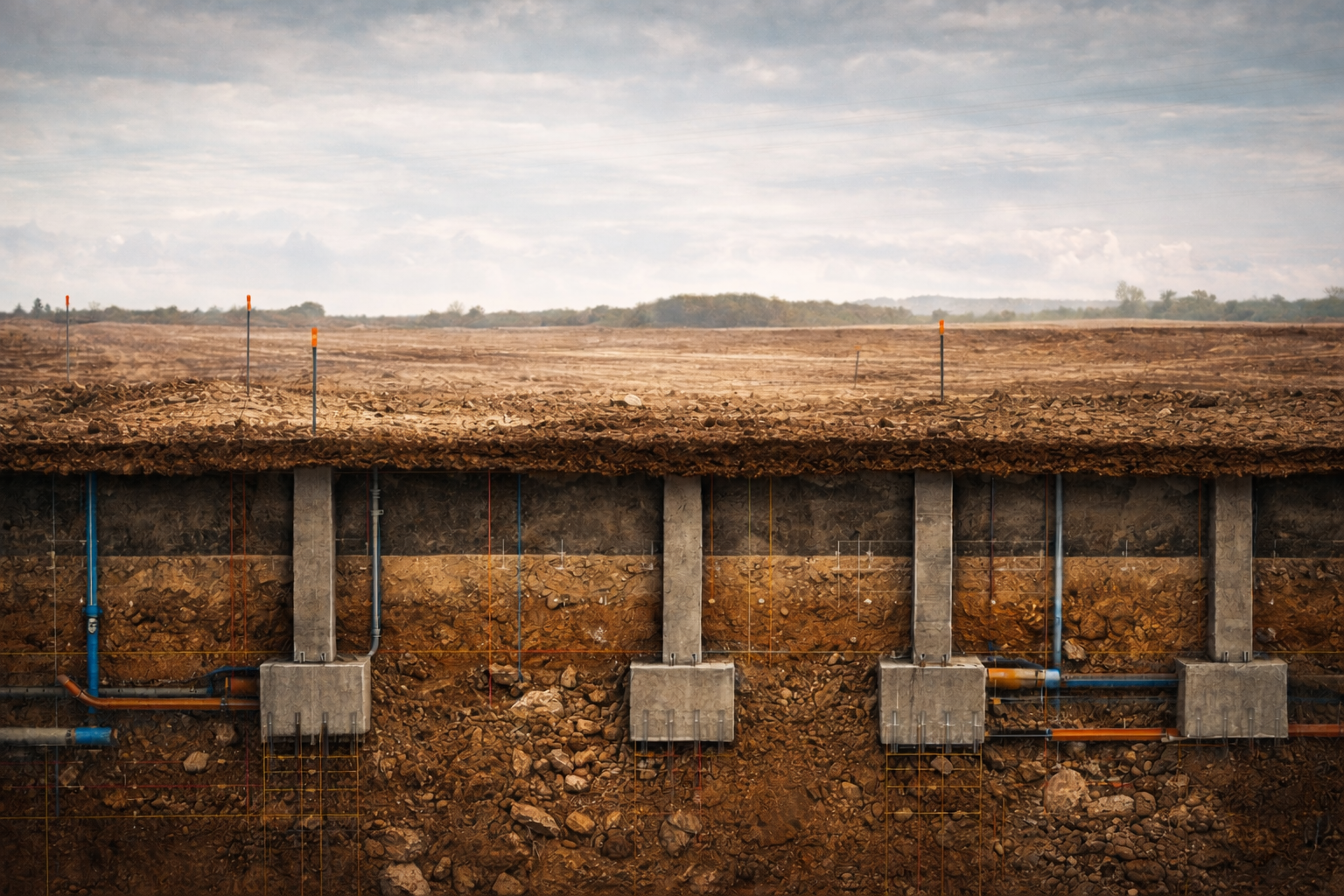
Before the Building: The Work Beneath the Surface
When people see a new development, they see the finished product — the architecture, the signage, the ribbon cutting. What they don’t see is everything that had to happen before construction could even begin.
Long before design renderings are shared or financing closes, there is a detailed, technical, and often expensive process happening beneath the surface. Development doesn’t start with a crane. It starts with understanding the ground.
One of the most overlooked phases of real estate development is pre-development — and within that phase, site evaluation. Before we can responsibly design or finance a project, we have to determine whether the land itself can support what we intend to build. That requires investigation, testing, engineering, and patience.
At the earliest stage, we are asking fundamental questions about the site, including:
Is the soil structurally suitable to support foundations?
Is it properly compacted, or will it require removal of existing fill and of new fill?
Are there environmental concerns that require remediation?
Is the property located within a floodplain or subject to stormwater constraints?
Are there underground storage tanks or remnants of prior industrial use?
Are there volatile organic compounds or other contaminants present?
These answers don’t come from observation. They come from environmental assessments, geotechnical borings, and surveys. Each study helps determine whether a project can move forward — and if it can, what adjustments must be made to make it viable.
Sometimes the soil is clean but not structurally sound. Sometimes it is structurally stable but environmentally compromised. In some cases, remediation is manageable. In others, the cost of addressing what lies beneath the surface can significantly alter the feasibility of the entire project.
And this is only the beginning.
From concept through pre-development, entitlement, design refinement, financing, and permitting, a project can take 18 to 24 months before construction even begins. Once construction starts, another 12 to 24 months may pass before the building is complete. After that, stabilization — leasing units, onboarding tenants, and reaching operational sustainability — can take an additional year.
From idea to fully functioning community, a development can easily require three to four years of disciplined work.
During much of that time, the work is largely invisible. There are no cranes in the sky. No finished facades. No grand openings. There are only plans, studies, meetings, financial modeling, and careful decisions about risk.
This is where development demands long-term commitment.
Before capital is fully secured, before revenue is generated, developers are investing time, resources, and pre-development dollars with no guarantee of outcome. The process requires patience, conviction, and the willingness to move forward through uncertainty.
By the time a ribbon is cut, the real work has already happened — quietly, methodically, and often years earlier.
Development is not just about vision. It is about discipline. It is about understanding risk before it becomes visible. And it is about staying committed long enough to turn dirt into something that serves people and strengthens a community.
Before the doors open, before residents move in, before anyone sees the building — there is the dirt.
And that is where development truly begins.
As a developer, this phase is often the most defining. It’s where you decide whether to move forward, whether to assume risk, and whether the long-term vision justifies the short-term uncertainty. It’s not the most visible part of the work, but it is the most consequential. If you’re willing to do the hard analysis, invest in due diligence, and stay disciplined when the answers are complex, you build on a foundation that can support something meaningful. That’s the responsibility — and the commitment — behind every project we take on.